

Einwohner: 34 Millionen
Mitgliedsunion: CEBP (Convencion Evangelica Bautista del Peru)
Projekte in diesen Arbeitsbereichen:
Humanitäre Arbeit
Gemeindeentwicklung
Kompetenzförderung
How Victoria transformed a village
Church planting among the Quechua people in Peru
In the Quechua villages of the Peruvian Andes, the role of women is clearly defined: they take care of the home and children. Founding a new church independently is not part of that role. But with a love for the gospel and for people in her heart, Victoria sets out to do just that in the midst of the pandemic. Adrián Campero reports on how her ministry changed an entire village.
Machismo still prevails in large parts of Latin America. This is also true among the Quechua: women take care of the home and children, but men make all the decisions. Being respected and having a say in decisions are not a given for many women. Although there are women who hold positions of responsibility in companies and at the municipal level, quite often they are not respected nevertheless. This is changing where people are turning to the Christian faith. What is more , women are important proclaimers of the Gospel and play a key role in church planting. Victoria is one of these missionaries.
Touched by the lack of prospects
Victoria actually comes from Andahuaylas, a town in the Andean highlands west of Cusco. Her husband is a teacher. When he was transferred to the Mariscal Gamarra district, they both found faith and were baptised. Through the work of Victoria`s husband at the school in Llauqui and the friendships they made there, they learned about the challenges facing the small village. As in many Quechua settlements, these challenges are great: poverty and lack of prospects drive people to alcohol. Violence follows – in the family and in public. Victoria was touched by the living conditions in Llauqui and felt a deep desire to introduce people to God's transforming love.
Church planting during the pandemic
The timing for Victoria's missionary activity seemed extremely unfavorable. In 2020, in the midst of the uncertainties of the coronavirus pandemic, the 48-year-old wanted to bring the Good News to Llauqui. Adrián Campero, director of the EBMI Quechua Mission, advised her to be cautious. But Victoria would not be dissuaded: “Brother Adrián, death has come to our village. In Llauqui, there are people I know who need Jesus. I will go there to tell them about the Gospel.” So Victoria set off on a two-hour walk uphill to tell people about Jesus. Two weeks later, 20 people had already converted. In the midst of the pandemic, a new church was born.
Transformation in Llauqui
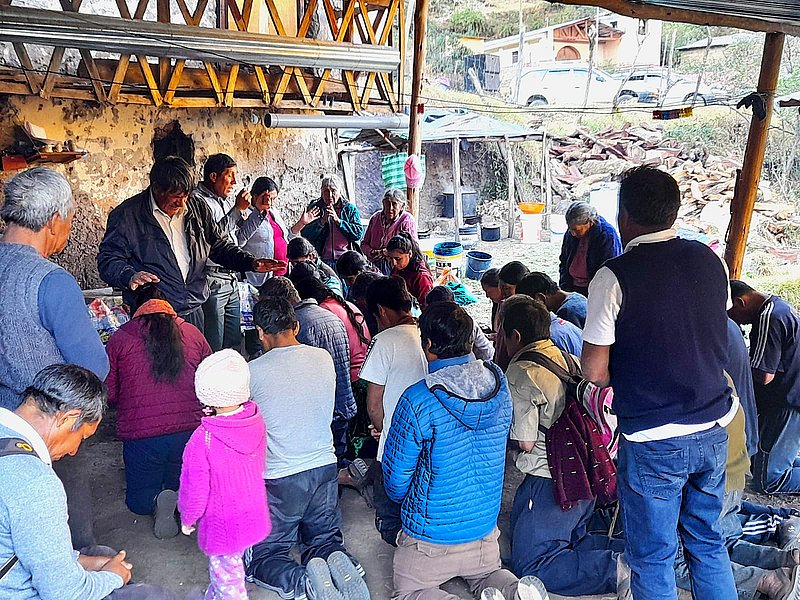
Victoria's commitment to the people of Llauqui sparked a comprehensive change. Women, men, and children found faith and were baptised. The village has just over 100 inhabitants and of these 70 have already been baptised. Around 80 to 90 people attend church services. These are currently held on the property of a man who was once considered the most violent resident of Llauqui. Through God's love, he has changed and is happy to host the services while the young congregation does not yet have its own building. He is not the only one who has changed. Domestic violence and alcoholism have declined significantly. People are happy about this new sense of security and care more for one another, especially for the elderly and sick. Victoria is highly respected and leads the church. This has also changed the general attitude toward women: less machismo, more respect and recognition.
More missionaries, more churches
Among the Quechua churches, there is a great desire to reach more of their people with the gospel. The church in Llauqui is already supporting further missionary work. Victoria is not the only missionary in the region. The mother of three coordinates a team of missionaries in Mariscal Gamarra. In many places, women are bringing the Good News to the people. The goal is to continue investing in discipleship and training leaders who will then go on to plant churches. That is why women and men are being trained at the Quechua Bible Seminary. At the same time, the Quechua Baptist Union in Peru is empowering women in leadership.
Missionaries like Victoria are paving the way for this perspective: with her talent and passion, she is a role model for others and shows how important women are in proclaiming the gospel and planting churches – and thereby bringing entire villages into contact with the transforming love of God.
According to a report by Adrián Campero, head of EBMI missionary work among the Quechua people in Peru