
Einwohner: 1,4 Milliarden
Mitgliedsunion: 18 Partner
Projekte in diesen Arbeitsbereichen:
Gefährdete Kinder
Kompetenzförderung
Humanitäre Arbeit
Gesundheitsfürsorge
India: Women, Leadership, and Hope
A Faith-Based Reflection from Rural India
In India, many women still experience discrimination and violence. But there are ways to bring about change: Together with various partners, EBM INTERNATIONAL empowers women – in children's homes, through education, and in leadership roles. A doctor from Serango Christian Hospital reports.
Discrimination at all levels
The situation of women in India reflects both progress and persistent struggle. While urban India has made visible strides in women’s education, employment, and leadership, gender discrimination continues to shape the lives of many women in rural and tribal communities. There is still a common belief that women are weaker or less suited for leadership, and this mindset quietly influences social, cultural, and even church practices.
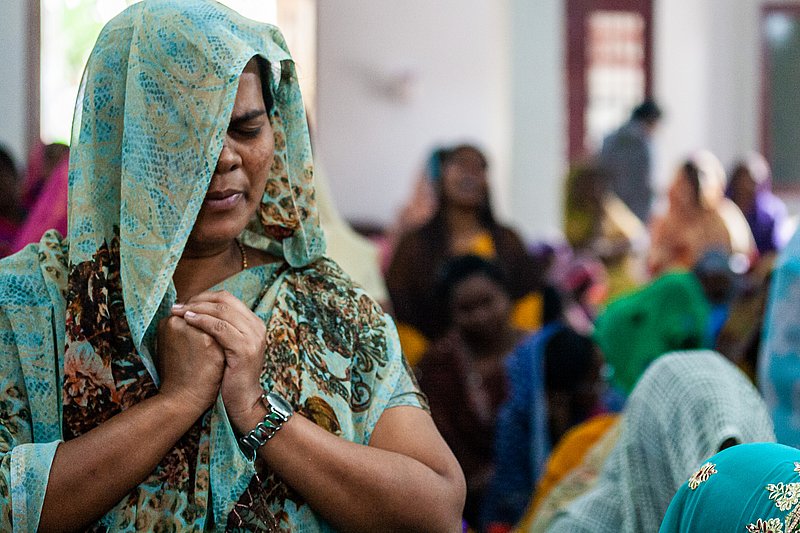
In the tribal community where I currently serve among the Soura tribe, I observed a practice that deeply moved me. During church services, men sit on chairs while women sit on the floor—even young boys are given chairs. Traditionally, chairs are meant for elders or those unable to sit on the floor. When I asked the women’s secretary of the Soura Baptist Church about this, she replied, “This is how it has always been.” and when I questioned why it was never questioned, she replied “We don't really have a say”. This simple response revealed how deeply tradition can normalize inequality, even within spaces meant for worship and unity.
Acceptance of women in transition
In some Christian denominations, not just in India but throughout the world, certain interpretations of Scripture are followed where women are discouraged from preaching or speaking publicly in church. These practices often limit women’s leadership and visibility. However, in urban churches, the picture is changing, with women increasingly serving in leadership and ministry based on their calling and abilities.
Professionally, urban India has also begun to accept women in leadership roles, especially in healthcare. Many hospitals are run by women, and competence is valued over gender. Yet acceptance is not immediate everywhere. Coming from CMC Vellore, one of India’s leading medical institutions, and entering a rural tribal setup was a cultural shock for me. Initially, the community struggled to trust a woman doctor. Over time, through consistent service, patience, and God’s grace, trust was built.
Jesus got up from the meal, took off his outer clothing, and wrapped a towel round his waist. After that, he poured water into a basin and began to wash his disciples’ feet, drying them with the towel that was wrapped round him.
Gospel of John 13:4-5 (NIV)
There is still an assumption that higher authorities may not listen to women, and sadly, this remains partly true. Yet, there are deeply joyful moments that affirm hope. Today, the same tribal community honours and respects us in church because we serve at Serango Christian Hospital. Once, they washed our feet as a sign of respect—a gesture traditionally reserved for male leaders. In that moment, I felt reminded that true honour comes from service, just as Christ taught us.

EBMI projects empower women in India
Christian mission work plays a powerful role in bringing transformation. When I learned about EBMI projects providing sewing machines and food support, my heart was filled with gratitude. Teaching women skills is true empowerment. Many women endure abuse and violence simply because they lack financial independence.
I believe financial literacy is a vital but often neglected area of empowerment. Teaching teenage girls and young women how to manage finances, save, and plan for the future could be life-changing. I personally learned the importance of financial management during times of crisis at our hospital—lessons I never expected to learn but now deeply value. Many women are never given this opportunity.
When he had finished washing their feet, he put on his clothes and returned to his place. ‘Do you understand what I have done for you?’ he asked them. ‘You call me “Teacher” and “Lord”, and rightly so, for that is what I am. Now that I, your Lord and Teacher, have washed your feet, you also should wash one another’s feet.
Gospel of John 13:12-14 (NIV)
Strengthening women in leadership requires intentional inclusion, mentoring, and trust. Women must be given space to lead, serve, and grow—within churches, communities, and institutions.
As for my own journey, I am still learning and finding my way—as a woman, a doctor, and a follower of Christ. There are challenges and doubts, but also deep joy in serving God’s people. I believe women must take a stand with faith and courage. While we cannot always change systems, we can remain rooted in our identity in Christ and continue to serve with love, resilience, and hope.
Based on a report by a doctor at Serango Christian Hospital