Einwohner: 11 Millionen
Mitgliedsunion: CBCOCC (Convencion Bautista de Cuba Occidental)
Projekte in diesen Arbeitsbereichen:
Gefährdete Kinder
Gemeindeentwicklung
Kompetenzförderung
Humanitäre Hilfe
Hope has many faces – and sometimes three wheels
Microcredits in Cuba
One area of EBM INTERNATIONAL's work that offers comprehensive help to people in Cuba are microcredits. They are granted to women and men with a business idea that enables them to earn their own income. Usually, the credits are repaid within the agreed time frame. With the profits from their businesses, the small entrepreneurs provide for their families and even support mission projects in their own country.
Microcredits – a small step towards independence
Cuba's economy has been in a deep crisis for years. Although reforms in recent years have paved the way for small and medium-sized businesses, for many people, starting their own business is impossible without start-up capital. This is where microcredits come in: small loans can bring about big changes. They open up new income opportunities for families, create prospects, and even strengthen the work of local churches.
Since the program began in 2016, 22 project proposals have been submitted, 20 of which have been approved and 11 successfully completed. The projects range from shoe workshops, cafeterias, pig farming, and toy production to transportation solutions using electric tricycles. More than 40 families have benefited directly so far – and many more people through the services and jobs that have been created as a result.
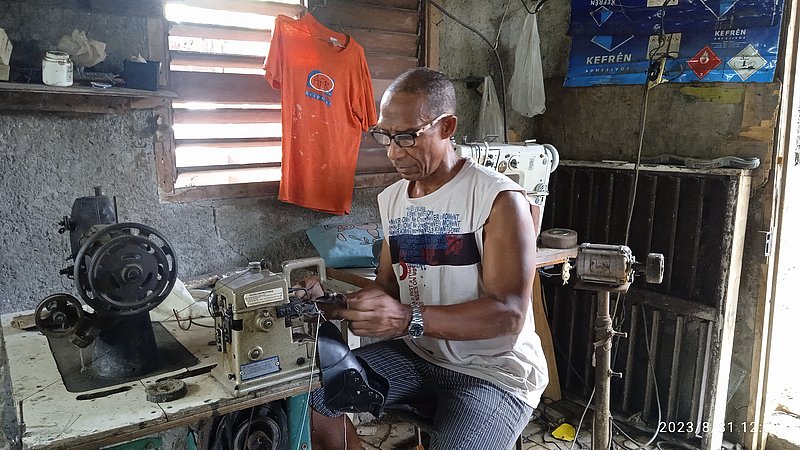
Vincente – a shoemaker fights his way through
In January 2020, Vincente took the plunge into self-employment. With the help of a microcredit, he opened a small shoe workshop in Cuba's capital, Havana. He makes custom-made shoes for children, adults, and even special orthopedic designs. But the economic situation pushed him to his limits: contracts fell through, materials were lacking, and customers stayed away. Time and again, he was faced with the question of whether he should give up.
His perseverance helped him to keep going despite all the setbacks. He attended trade fairs, offered custom-made products, and slowly built up a loyal customer base. With determination, he paid back his loan and managed to provide for his family. Today, he knows that without the courage to take risks and the start-up assistance provided by the microcredit, his dream of owning his own workshop would not have come true.
Yoel – on the right track
One particularly impressive example is the “El Buen Camino” project. In 2023 Pastor Yoel was able to purchase an electric tricycle—the first of its kind in his region. At first, many things were new to him. He had to apply for a driving licence, modify his parking space, and find customers. But word quickly spread that he was reliable and punctual in transporting people and goods.
Demand rose rapidly, especially in times when diesel and gasoline were in short supply. His services are also in greater demand than usual during the vacation months (July and August). For people moving house, going on short trips, or simply visiting the neighborhood – his tricycle is ideal for all of these tasks.
Today, Yoel has 30 to 40 regular customers. The tricycle contributes 40 percent to his family's income. He has paid off his loan in full and covered all repairs and maintenance costs. Even more than that, he regularly supports his local church with his vehicle. “This stability gives us security and hope,” he says gratefully.
Luis – Toys that touch children's hearts
Microcredits are not only focused on food or transportation. Sometimes projects arise that seem small at first glance but have a big impact. Luis, an experienced carpenter and member of the Cuban Artists' Society, had an unusual idea: to make toys for children that are educational, robust, and affordable.
With the help of his microcredit, he was able to purchase machines and materials. Soon, his small workshop was producing wooden puzzles, building sets, and educational games that were met with great enthusiasm in schools and families. In a country where toys are often unaffordably expensive or unavailable, this was more than a small blessing. Several families are now involved in production, so that others can also benefit from the income.
“It makes me happy when children can learn and laugh with my toys,” says Luis. His project, Cherub Toys, is an example of how creativity, craftsmanship, and a little start-up capital can bring hope to the next generation.
Diversity and creativity
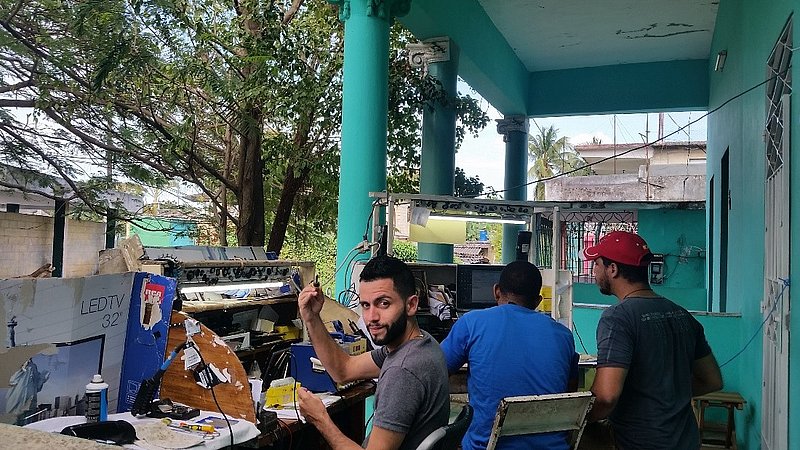
The wide range of projects impressively demonstrates how people in Cuba are seizing opportunities. With imagination and courage, they develop business ideas that address precisely situations where there is a need. In addition to the three projects mentioned above, there are other initiatives. In the small town of Iguará, the Manso family opened the MANÁ cafeteria, which has become a central meeting place for students, travelers, and neighbors. Pastor José established a pig farm. The money this makes supports not only his family, but also the church and children in the surrounding area. The Ebenecell mobile phone repair shop was able to buy new parts with a loan and has been offering reliable service ever since – even after the founder emigrated, it continues to operate. Projects such as La Bodeguita, a small grocery store, ensure basic supplies in times when everything is in short supply.
Hope that lasts
Microcredits are more than just money. They give people courage, open up ways out of dependency, and create new perspectives. Those who receive them feel that someone believes in their idea. And many report how much they feel supported by God and their churches. Whether for food, transportation, services, or creative ideas, microcredits open doors that would otherwise remain closed.
Even if some projects stall due to inflation, material shortages, or disease, the positive results outweigh the negative. Microcredits achieve great things with little money. They are a sign of hope —for families, for churches, and for an entire country that is looking for new ways forward.
by Julia-Kathrin Raddek
This article first appeared in the magazine 3-25.